

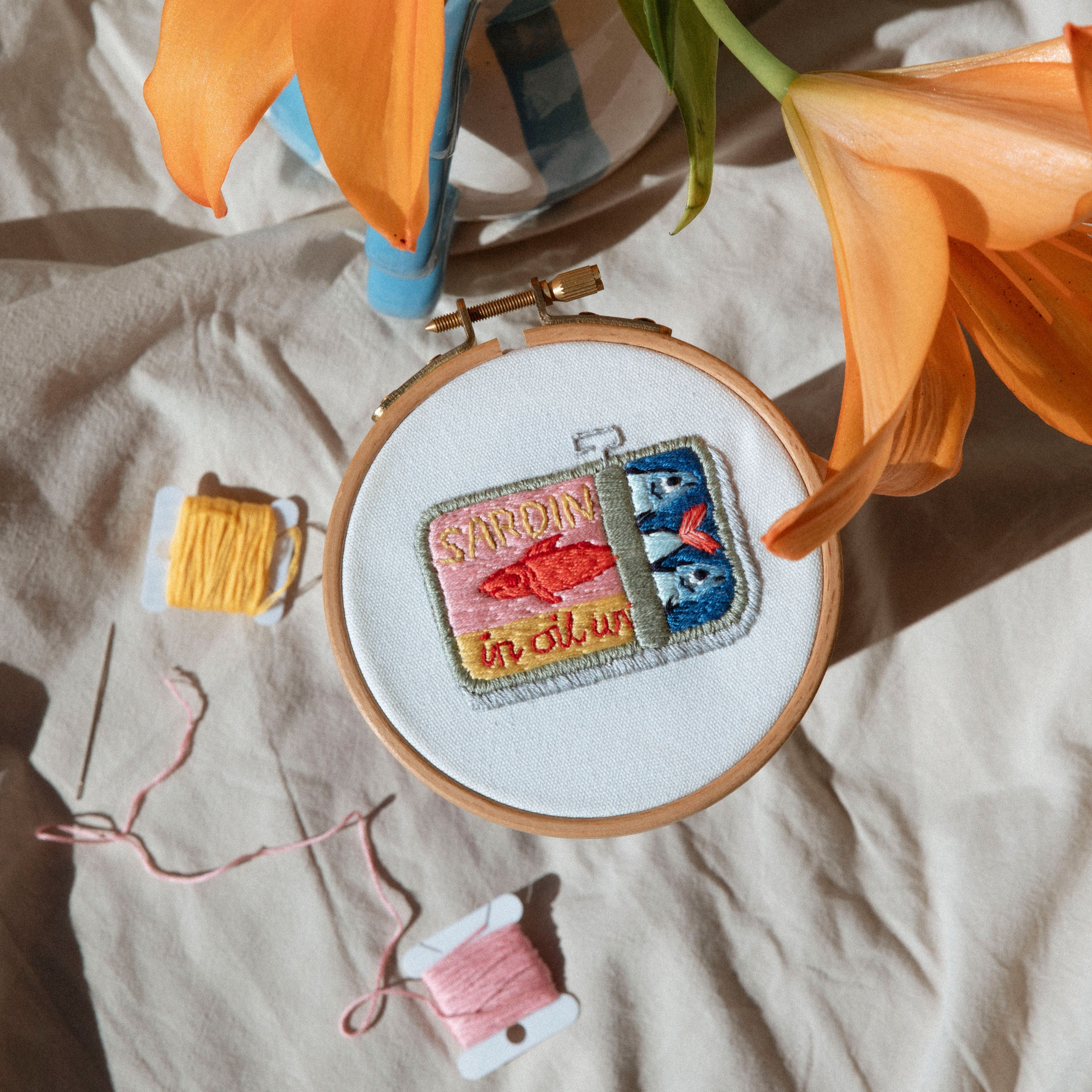
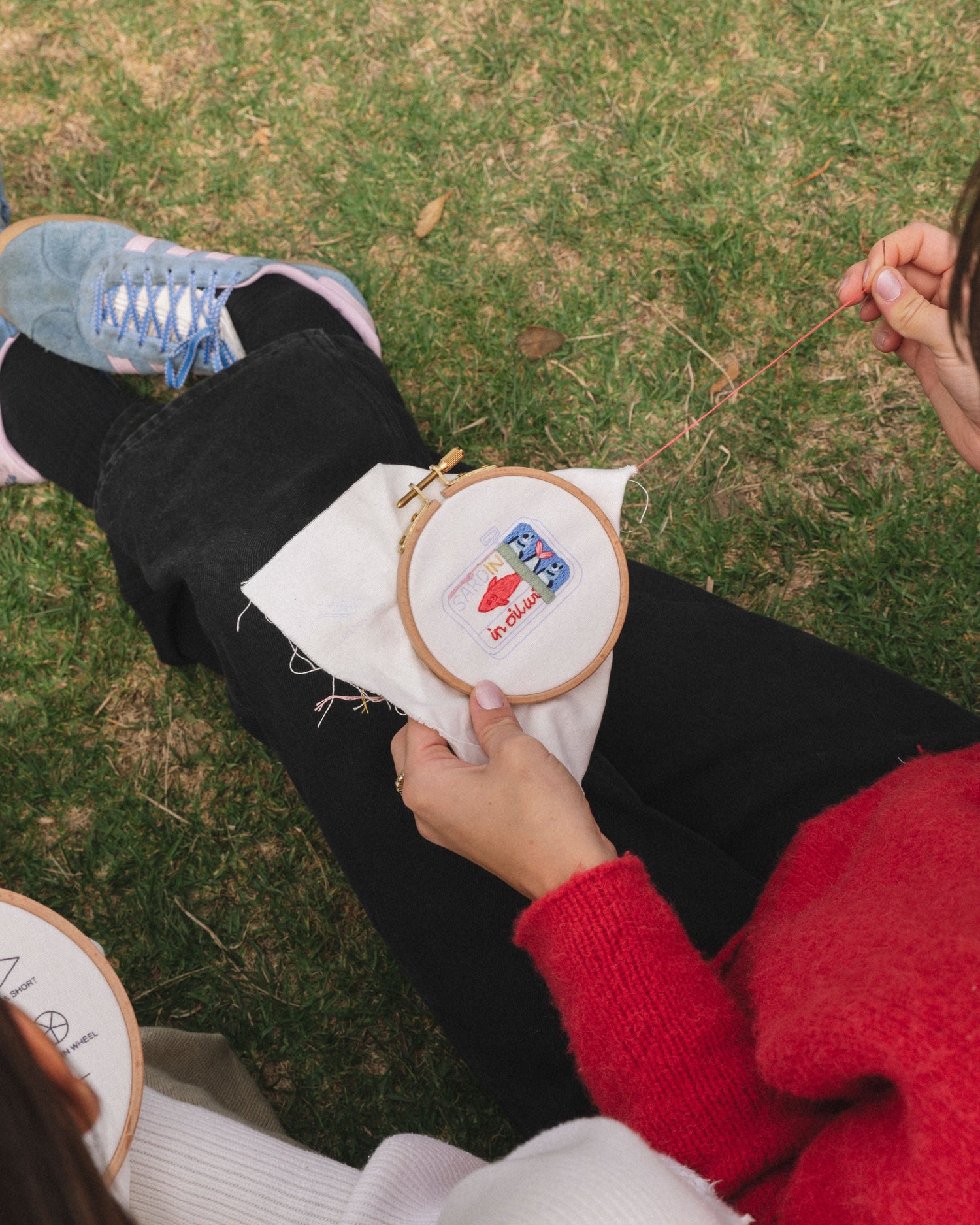
If you have ever sat down with an embroidery hoop at the end of a chaotic day and noticed your shoulders drop about two inches within five minutes, you already know the secret. Embroidery is one of the most underrated anxiety tools available - quiet, tactile, portable, and backed by a surprising amount of science.
This is not about replacing therapy, medication or any of the things that actually help with a clinical anxiety disorder. It is about adding one small, reliable practice to your day that your nervous system will genuinely thank you for. Here is why it works, what is actually happening in your brain when you stitch, and how to build a twenty-minute daily embroidery habit that sticks.
Why your brain likes a needle and thread

Anxiety is, at its core, a body that is stuck in "on" mode. Your sympathetic nervous system - the part responsible for fight-or-flight - is running a little hotter than it needs to, and your thinking brain keeps looking for new things to worry about. The trick to turning the volume down is not to think your way calmer. You cannot logic an anxious nervous system into relaxing. You have to give your body something else to do.
Embroidery ticks three of the boxes most commonly recommended by therapists for nervous system regulation:
1. Repetitive, rhythmic movement
Rhythmic hand movements have been shown to shift the body from sympathetic (alert) to parasympathetic (rest-and-digest) activity. Knitting does this. Swimming does this. Walking does this. Embroidery absolutely does this - push, pull, push, pull - your breath naturally slows to match the rhythm of your hands, and your heart rate follows.
2. Low-stakes focus
Your anxious brain wants a job. If you do not give it one, it will invent one - usually by replaying an awkward thing you said in 2019. Embroidery gives you a clear, low-pressure task that occupies your working memory just enough to crowd out the mental chatter, without being so demanding that it creates a new kind of stress.
3. A visible, tangible result
Anxiety often comes with a nagging sense of "I am not achieving anything". Stitching for twenty minutes gives you a physical thing you can see progress on. Three petals finished. A leaf filled in. A French knot that actually worked. Small wins are a cheap and effective mood lift, and embroidery serves them up on a literal wooden plate.
What the research actually says

Studies on knitting and other repetitive hand crafts consistently show measurable drops in cortisol (the main stress hormone), reductions in self-reported anxiety, and improvements in mood. A 2013 survey of more than three thousand knitters found that frequent knitters reported feeling calmer, happier, and more focused - with benefits rising the more often they practised. Embroidery sits in the same family of activities and produces the same kind of response. It is sometimes called "mindful making", and it is one of the few activities that therapists will actively recommend as an adjunct to more formal anxiety care.
Importantly, the benefit is biggest when it is consistent rather than occasional. Twenty minutes a day beats two hours on a Sunday. Your nervous system learns to associate the routine with calm, and over time the response happens faster - eventually you can pick up a hoop and feel your shoulders drop within the first three stitches.
The 20-minute embroidery ritual
Here is a simple, low-pressure way to try this for yourself. You do not have to be good at embroidery for it to work. You do not have to finish a whole project. You just have to show up, for twenty minutes, most days.
Step 1: Pick a kit that is actually easy
If your goal is calm, do not pick a complicated project. You want something with pre-printed fabric, pre-cut threads and clear instructions so your brain is not doing any problem-solving. The entire beginner-friendly collection is designed with exactly this in mind - just open the box, sit down, and stitch.
Step 2: Set up a dedicated "calm corner"
Keep your hoop, threads and needles in one place - a small basket or tray on a shelf - so you do not have to dig around for them when you want to start. The easier it is to begin, the more likely you are to actually do it on the days you need it most.
Step 3: Set a timer for 20 minutes
This is the key bit. Anxiety loves open-ended commitments ("I have to finish this tonight") and hates gentle boundaries ("I am going to stitch for twenty minutes and then stop"). Setting a timer removes any pressure to finish and lets you focus purely on the act of stitching.
Step 4: Pair it with an existing habit
The easiest habits to form are the ones attached to a habit you already have. Stitch while the kettle boils in the morning. Stitch while you listen to your evening podcast. Stitch for the first twenty minutes of the show you are watching. You are not adding an extra thing to your day, you are adding a nicer texture to something you were going to do anyway.
Step 5: Let yourself be bad at it
The point is not to produce a gallery-quality hoop. The point is to regulate your nervous system. A wonky French knot is still working. A crooked satin stitch is still working. Your hands are moving, your breath is slowing, your brain is quieter than it was twenty minutes ago. That is the whole win.
What design should you pick?

For anxiety-focused stitching, pick a design that makes you feel softer, not more impressive. Florals, nature scenes and simple shapes work beautifully. The Meadow Wildflowers kit is a popular choice for this exact reason - lots of variety to keep your hands busy, nothing complicated, and the finished piece looks like a bouquet you want to keep looking at.
Some people prefer kits with repetitive elements (lots of similar petals or leaves) because the repetition is more meditative. Others prefer kits with varied stitches because the gentle challenge keeps their mind from drifting back to worry. Try both and notice which one leaves you feeling calmer at the end.
You do not need an hour. You do not need experience. You do not need to finish anything. You need twenty minutes, a hoop, some thread, and permission to show up imperfectly. The rest of it - the quiet mind, the soft breath, the finished piece on the wall - happens all by itself.


Leave a comment
This site is protected by hCaptcha and the hCaptcha Privacy Policy and Terms of Service apply.